

1.Overview of magnesium and magnesium alloys
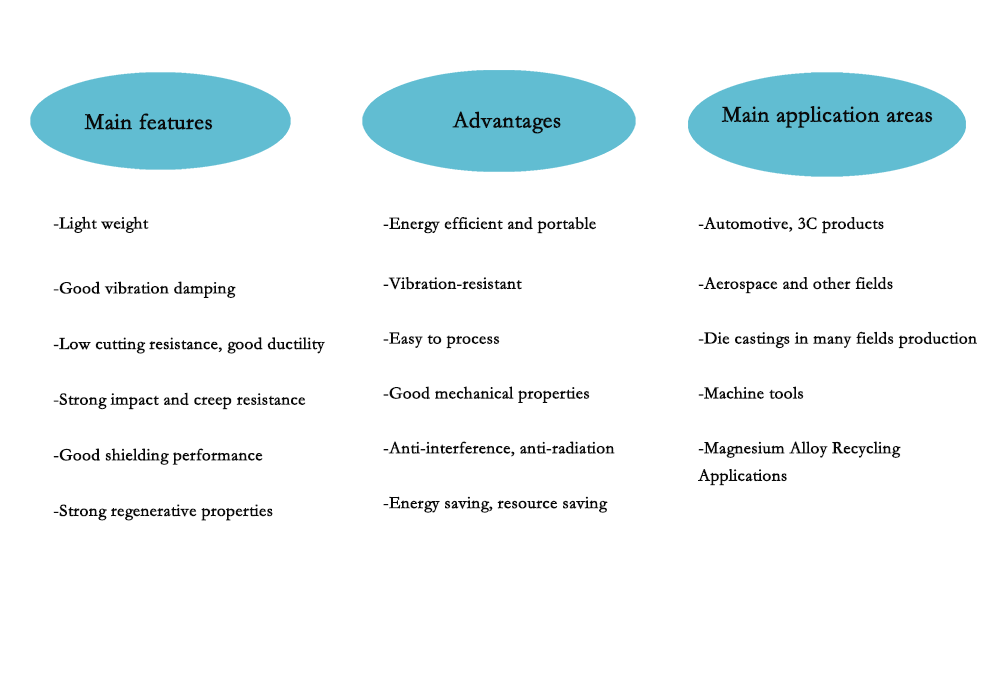
Magnesium alloy as the ‘21st century green engineering materials’, magnesium alloy is based on magnesium and other elements added to the composition of the alloy. Its characteristics are: low density (magnesium alloy 1.8g/cm3 or so), high strength, high modulus of elasticity, good heat dissipation, good shock absorption, the ability to withstand impact loads than the aluminium alloy, good corrosion resistance to organic substances and alkali. The main alloying elements are aluminium, zinc, manganese, cerium, thorium and a small amount of zirconium or cadmium. Currently the most widely used is magnesium aluminium alloy, followed by magnesium manganese alloy and magnesium zinc zirconium alloy. It is mainly used in aviation, aerospace, transport, chemical and other industrial sectors to achieve the purpose of lightweight. It is the lightest metal among the practical metals. The specific gravity of magnesium is about 2/3 of aluminium and 1/4 of iron, and it has the characteristics of high strength and high rigidity.
2.Classification of magnesium alloy

01. Early development (early-mid 20th century)
-First use: The commercialisation of magnesium alloys began in the early 20th century. Germany was one of the first countries to develop and use magnesium alloys, especially during the First World War.
-Early alloys: The earliest magnesium alloys included combinations with aluminium, zinc and manganese alloying, with alloys such as AZ91 (containing 9% aluminium and 1% zinc) being developed.
-Aerospace applications: In the 1930s and 1940s, magnesium alloys began to be used in the aerospace industry because of their light weight, which helped to reduce the weight of aircraft.
02. Mid-term development (1950s-1980s)
-Application in automobile industry: In the 1950s, magnesium alloy began to be used in the automobile industry, mainly used to reduce the weight of automobiles and improve fuel efficiency.
-Magnesium alloy casting technology: During this period, magnesium alloy casting technology has made significant progress, such as high-pressure casting and gravity casting technology, making mass production possible.
-Material Improvement: Scientists and engineers continued to improve the composition and manufacturing process of magnesium alloys to increase their strength, corrosion resistance and processability.
-Expanded Industrial Applications: Magnesium alloys have been extended to electronic products (e.g., cameras, laptop casings, etc.) to take advantage of their superior heat dissipation and lightweight properties.
03.Modern development (1990s - present)
-Environmental protection and recycling: With the increase in environmental awareness, magnesium alloy recycling and reuse technologies have gained importance.
-New alloy development: High-performance magnesium alloys such as WE43 (containing yttrium and rare earth elements) have been developed for applications requiring high strength and high temperature resistance.
-Biomedical applications: In recent years, magnesium alloys have been investigated for use in biomedical applications, such as bone internal fixation devices, because of their biodegradability and excellent biocompatibility.
-New Energy Vehicles: In electric and hybrid vehicles, magnesium alloys are used to manufacture body and chassis components to reduce vehicle weight and improve range.
-Advanced Manufacturing Technology: The application of new technologies, including 3D printing and powder metallurgy, has further enhanced the processing performance and application range of magnesium alloys.
4.Magnesium alloy industry chain
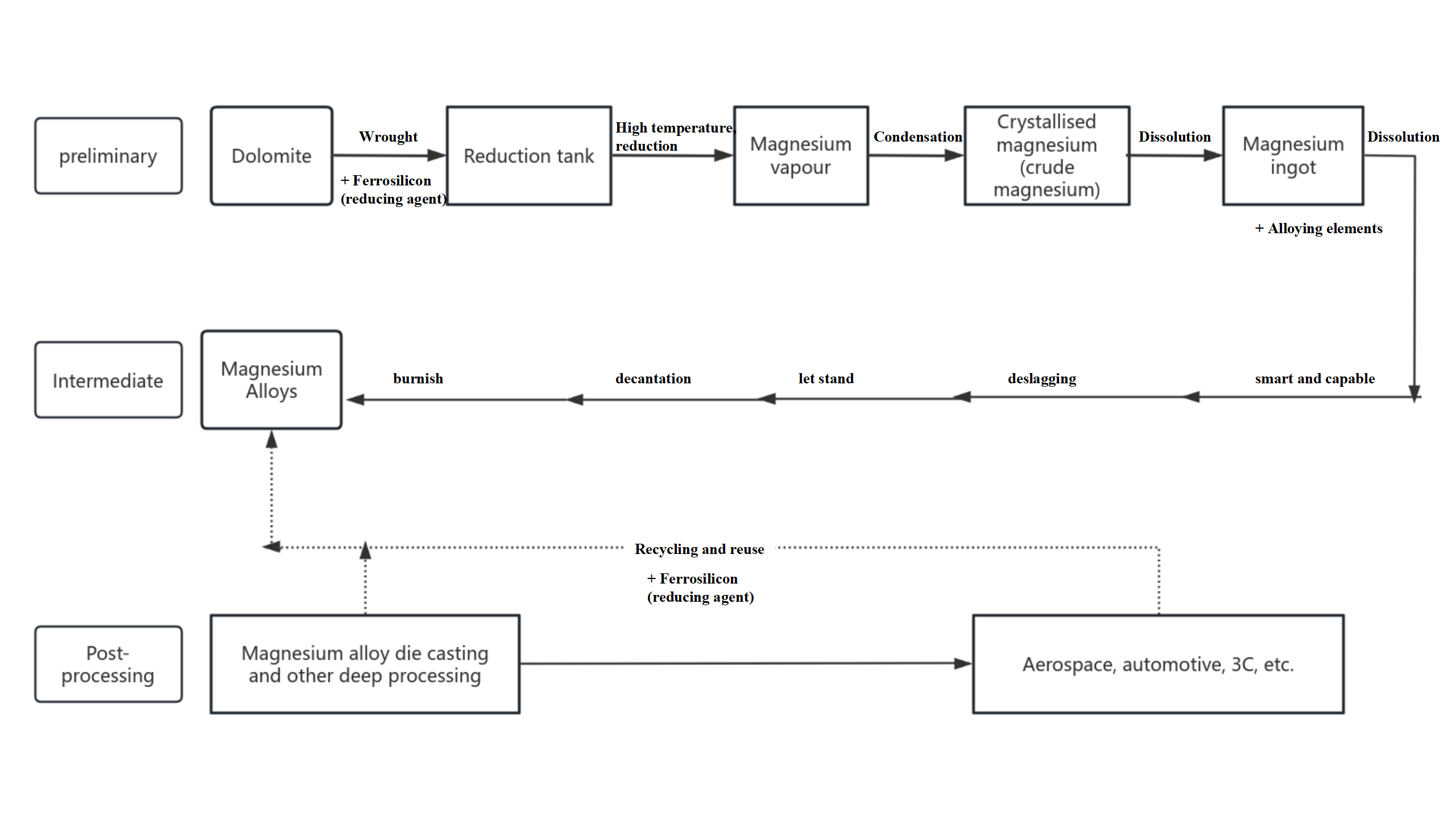
The magnesium alloy industry chain covers the whole process from raw material mining to final product manufacturing and application, involving a number of links and industries. The main links are explained here:
1) Raw material mining and primary processing
-Magnesium mining: the main ores of magnesium are dolomite (calcium magnesium carbonate) and magnesite (magnesium carbonate), as well as seawater and salt lake magnesium extraction.
-Primary magnesium production: magnesium ore is converted into magnesium metal by electrolysis or thermal reduction. Electrolysis method is mainly used for seawater and brine magnesium extraction, thermal reduction method (such as Pichin method) is mainly used for dolomite.
2) magnesium alloy production
-Alloy preparation: the original magnesium and aluminium, zinc, manganese, titanium and other metals according to a specific ratio of melting, made of a variety of magnesium alloys, such as AZ91 (aluminium, zinc magnesium alloy), WE43 (rare-earth magnesium alloy).
-Melting and casting: including gravity casting, high-pressure casting and continuous casting processes for the manufacture of magnesium alloy ingots and primary products.
3) Material Processing
-Extrusion and rolling: the magnesium alloy ingot after casting is extruded and rolled to make semi-finished products such as Magnesium Alloy Plate, Mgnaesium Alloy Rod and Magnesium Alloy Tube.
-Forging and stamping: Manufacture magnesium alloy parts of complex shapes and high strength by forging and stamping process.
4)Deep processing and manufacturing
-Machining: Turning, milling, drilling and other mechanical processing of magnesium alloy semi-finished products to produce final parts.
-Surface treatment: surface treatment of magnesium alloy parts, such as oxidation, coating, plating, etc., to improve its corrosion resistance and surface properties.
5) Downstream application areas
-Automotive industry: magnesium alloy is used to manufacture body structure parts, engine parts and wheel hubs, etc. to reduce vehicle weight and improve fuel efficiency.
-Aerospace: used in the manufacture of aircraft and spacecraft structural parts and fuselage parts, reduce the weight of the aircraft, improve performance.
-Electronic products: Used to manufacture electronic equipment housings such as mobile phones, laptops, cameras, etc., taking advantage of their light weight and good heat dissipation properties.
-Biomedical: Developed for use in medical devices and implants, such as bone internal fixation devices, utilising its biodegradability and biocompatibility.
6) Recycling and reuse
-Recycling of scrap: Recycling of magnesium alloy scrap and end-of-life products generated during industrial production.
-Recycling: The recovered magnesium alloy scrap is regenerated, re-melted and cast into new alloy products, forming a circular economy.
5.Magnesium Alloy Market Analysis and Industrial Distribution
China is the world's largest producer and consumer of magnesium. According to relevant data, China's magnesium production accounts for more than 70% of the global total. The magnesium alloy market scale has maintained steady growth in recent years, mainly benefiting from the expansion of downstream application fields and technological progress.
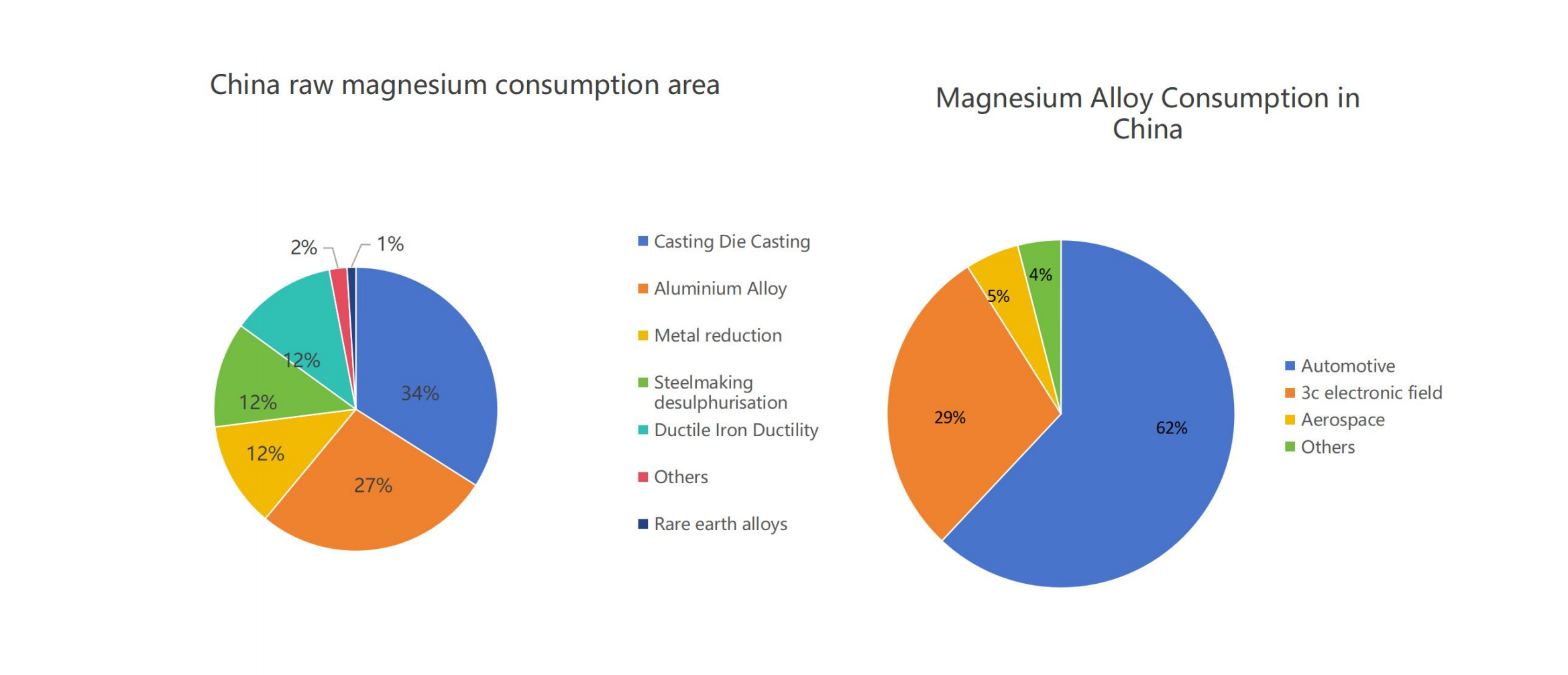
Magnesium processed products and aluminium alloys are the main areas of consumption, the sum of the two exceeds more than 60% of magnesium consumption; due to the transformation and upgrading of China's automotive industry and 3C and other industries, the application of magnesium alloys will be very broad, and the magnesium alloy industry has a promising market outlook. The lightweight, environmental protection needs of the automotive industry, especially the development of new energy vehicles, as well as magnesium alloy R & D technology and recycling technology continues to progress, will promote the use of magnesium alloy more widely. In the future, magnesium will become the third most widely used metal structure material after iron and aluminium, which also brings opportunities for the industrialisation of magnesium.
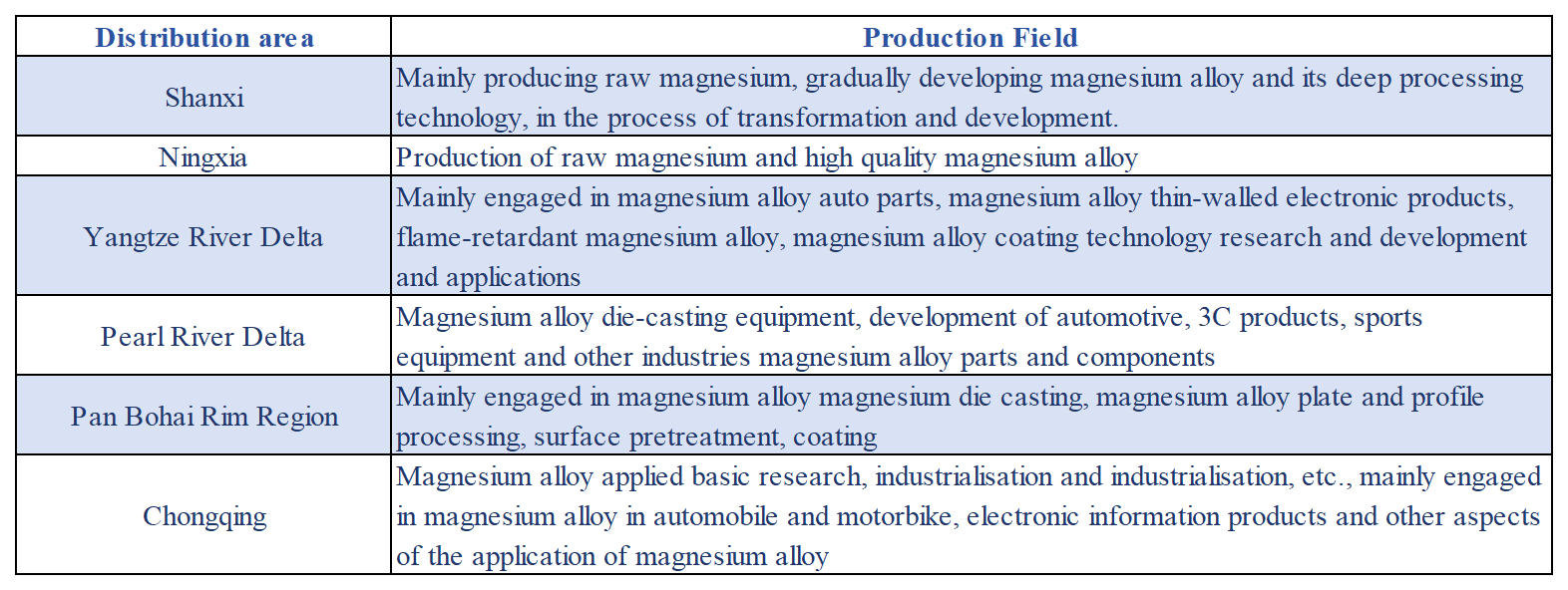
China has rich magnesium resources, mainly concentrated in Shaanxi, Shanxi, Liaoning and other places. China's magnesium alloy industry has a reasonable layout and obvious resource advantages. In recent years, with the tightening of environmental protection policies and the advancement of production technology, the production of magnesium alloy is gradually developing in the direction of green and high efficiency.