

The development of modern electronic technology puts forward higher and higher requirements on the performance of structural materials and components for electronic devices. In order to adapt to the development direction of light, thin and miniaturisation of electronic devices, it is required that the shell materials as electronic devices have the characteristics of low density, high strength and stiffness, good impact resistance and vibration damping, strong electromagnetic shielding ability, good heat dissipation performance, easy to form and process, beautiful surface, durability, low cost, easy to recycle and in line with the requirements of environmental protection, and so on. Traditional plastics and aluminium have been gradually difficult to meet all the requirements, magnesium and its alloys are the ideal materials for manufacturing electronic device shells, and have a broad application prospect in electronic and household electrical products. Therefore, recently the application of magnesium alloy in electronic devices is getting rapid development with an annual growth rate of 25%, presenting a good prospect of development.
The main application areas are as follows:
1. Notebook Computers
Case and Chassis: Magnesium alloys are commonly used in the case and chassis portion of laptop computers to not only reduce the overall weight of the machine, but also to improve the strength and thermal performance of the device. For example, many high-end laptop computers use magnesium alloy shell, in order to achieve thin and light and strong design. According to authoritative predictions, in the future, more than 33mm laptop-type computer monitor shell will be made of magnesium alloy. However, a steel mould will be worn out after producing a certain quantity and the cost is too high to meet the high volume requirements. Later, mould makers such as Watter Technology Company and Catcher Technology Company in Taiwan, China, increased the casting output of each steel mould to 50,000 pieces, expanding the scale and saving costs, making global laptop computer manufacturers once again consider replacing plastics with magnesium alloys.
2. Tablet PC
Case: Magnesium alloy is used in the case of tablets to give them lightweight and high strength, while improving the feel and heat dissipation of the device. Many well-known brands of tablets use magnesium alloy to enhance the user experience.
3. Smartphone
Centre frame and back cover: The application of magnesium alloy in smartphones is mainly reflected in the centre frame and back cover parts. The magnesium alloy centre frame can provide good structural support while reducing the weight of the phone. The use of magnesium alloy in the back cover helps to improve heat dissipation efficiency and the overall strength of the device.
4. Camera Equipment
Camera Bodies: High-end digital camera and camcorder bodies are often made from magnesium alloys to reduce weight and provide rugged protection. The high strength and good machinability of magnesium alloys make them suitable for the manufacture of high-precision camera bodies. Die-cast magnesium alloy thin-walled complex shape castings have been used to manufacture the Sony portable digital camcorder DCR -VX1000 housing. The shell is a large beam structure, there are five die-castings, including the main frame, mechanical chamber and tape chamber, etc. These castings are die-cast with AZ91D magnesium alloy and then coated with a layer of acrylic resin imitation dermatolysis layer.
5. Communication equipment
Base station and router housings: Magnesium alloy is also used in the housings of communication equipment such as base stations and routers. Its excellent heat dissipation performance and strength characteristics help the equipment to maintain stable operation under high load working environment. In terms of mobile communication, after the magnesium alloy is used to manufacture the shell of mobile phone, the electromagnetic compatibility is greatly improved, and the electromagnetic wave in the communication process is received and sent through wireless, which reduces the dissipation of electromagnetic wave, improves the communication quality of mobile phone, and reduces the harm of electromagnetic wave to human body. In addition, the strength and rigidity of the shell are improved, which is not easy to be damaged and meets the requirements of lightness, aesthetics and practicality.
In the world, the use of magnesium alloy material preparation parts, more than 90% of the 3C electronic products are processed by die-casting method.AZ91D is the most commonly used one kind of die-casting magnesium alloy, however, AZ91D alloy's high temperature resistance is poor, which limits the scope of its use. The results of research by relevant scholars show that the tensile strength of AZ91D decreases with the rise of temperature, and the tensile strength at 150°C decreases by about 30% compared to that at 25°C. Therefore, in order to improve the high temperature performance of AZ91D, people try to add cerium, lanthanum, yttrium and other rare earth elements in AZ91D alloy, so that the room temperature and high temperature mechanical properties of the alloy are significantly improved. Rare earths affect the flow properties of the alloy while improving the high temperature properties.
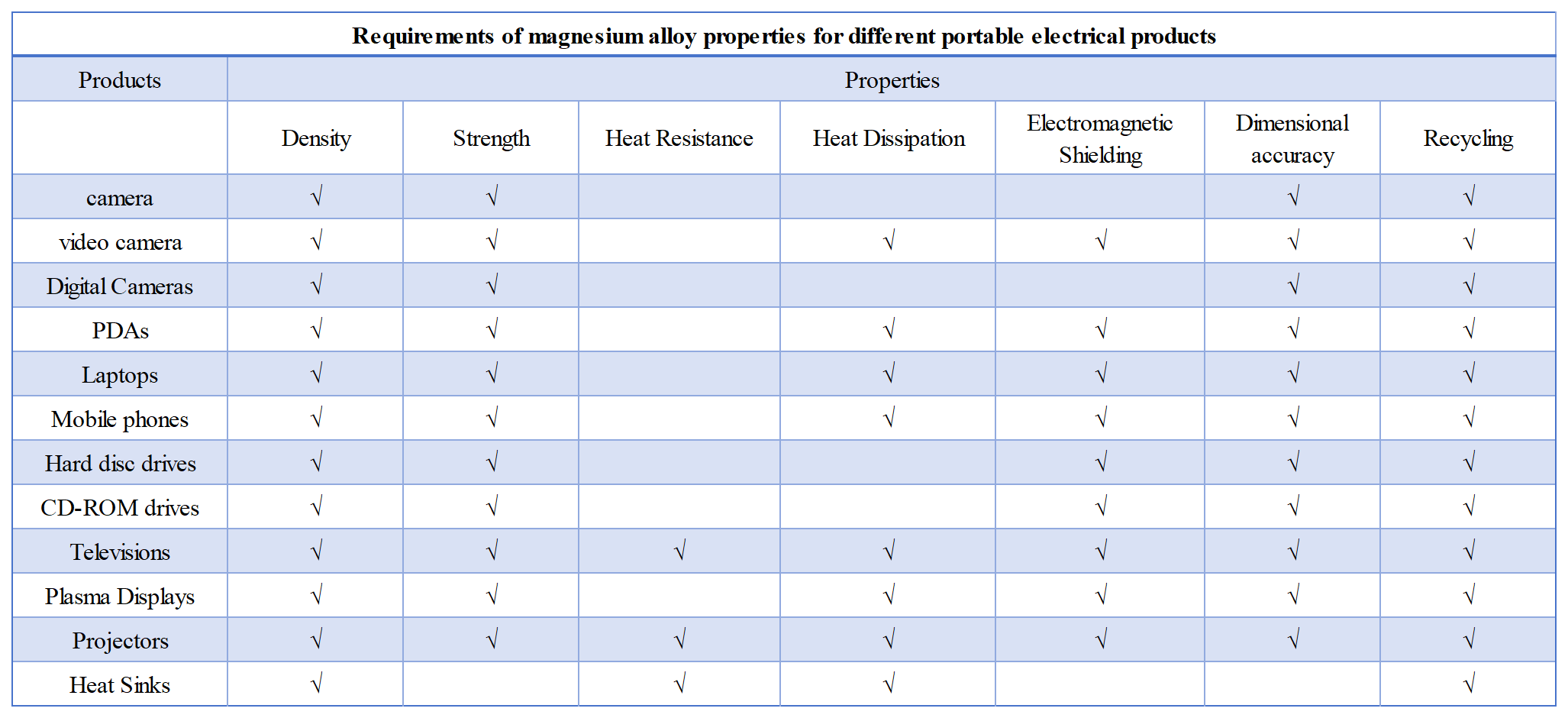
Europe and the United States pioneered the use of magnesium alloys for automotive parts to reduce mass, and then moved on to the electronics and electrical industries. In Asia, China and Taiwan have been using magnesium alloys as the main body for laptop cases. Japan usually in the digital camera, CD player shell, computer parts and other aspects of the gradual popularity of the blades of household ventilation fan also used magnesium alloy material instead of plastic, even if the ordinary commodities are also using magnesium, and to consider increasing the amount of its use.